
Aluminium forgings for automotive parts
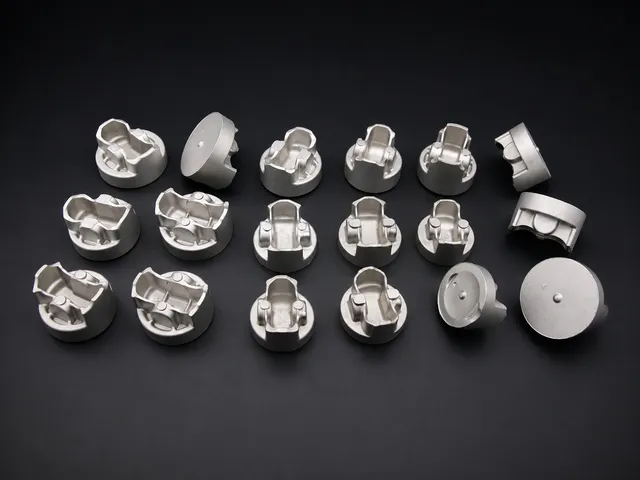
A/C compressor swash plate
Near-net forged blank for the swash plate of an automotive A/C compressor, machined to final geometry after forging.
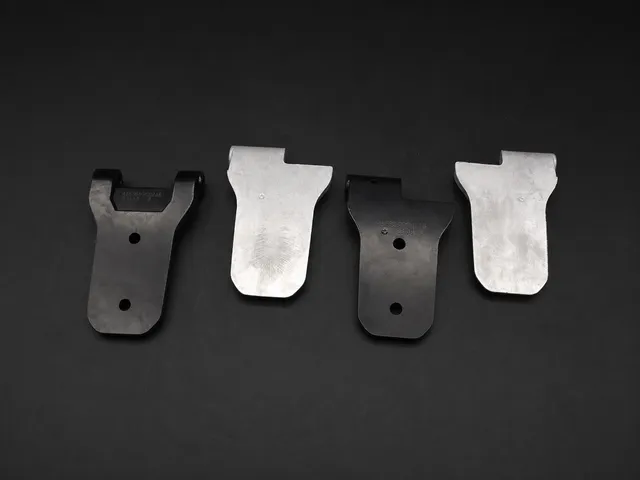
Automotive aluminium door hinge
Forged hinge body for aluminium-intensive vehicle closures.
Engine aluminium mounting bracket
Forged bracket carrying powertrain loads, where fatigue behaviour rather than static strength sets the design.
Ultrasonic sensor housing
Thin-walled cold-forged housing for automotive ultrasonic sensors.
Engineering requirements we usually see
Automotive components are normally sized against fatigue rather than a single overload, so how the material behaves under repeated loading tends to drive the design. Where the alloy, heat treatment, part design and process parameters suit it, forging can align the grain more closely to the load path and reduce typical porosity risk, which may help fatigue behaviour. Actual performance still depends on all of those factors together and on the service loads.
Weight is the second requirement. As body structures move to aluminium, brackets and hinges have to hold stiffness at lower mass, and section design becomes as important as material choice.
Send us a drawing.
PDF, STEP or IGES. We will respond within two business days after you contact us.